
Institute of Molecular Genetics of the Czech Academy of Sciences
António P. Baptista obtained his degree in Veterinary Medicine from the Technical University of Lisbon, Portugal, followed by a PhD in Biomedical Sciences (Immunology) from the Vrije University of Amsterdam. He subsequently trained at leading institutions including the National Institutes of Health (USA) and the Vlaams Institute for Biotechnology (Belgium), where he investigated immune regulatory processes related to T cell function.
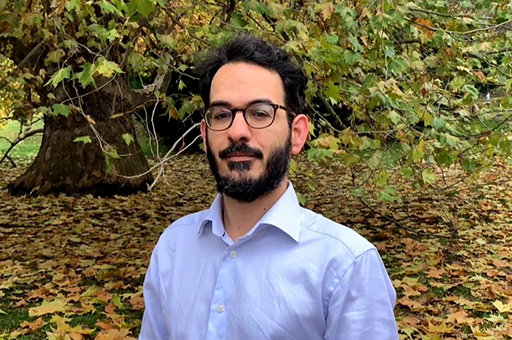
His work has been recognized with multiple awards and international fellowships, including the Marie Skłodowska-Curie postdoctoral fellowship.
In 2025, he established his own Laboratory of Immunophysiology at the Institute of Molecular Genetics of the Czech Academy of Sciences (IMG), focusing on the mechanisms that govern immune cell development and differential function across tissues.
Can you briefly describe what your area of expertise is?
I am an immunologist. Throughout my career, I worked to unravel how lymphoid organs develop and work to support efficient pathogen detection and clearance, while simultaneously avoiding detrimental responses against self.
What do you plan to focus on in your new Laboratory of Immunophysiology?
In the Laboratory of Immunophysiology, we will study the development of immune cells and lymphoid organs. And we will study the interactions established between immune cells and their environment during immune responses, focusing on the spatio-temporal, cellular and molecular mechanisms that determine the acquisition of pathogen-tailored T cell effector states.
“I have always wanted to become an independent researcher, exploring my own questions.“
What convinced you to start this new chapter at the IMG in Prague?
I have always wanted to become an independent researcher, exploring my own questions. When this opportunity appeared and seemed to tick all the boxes regarding the possibility of performing cutting edge research, I simply jumped at it.
You are moving to a new country with your whole family. What are difficulties? Could you share any tips and tricks for making such a big transition smoother?
At work, the stress comes from finding an empty, lonely lab space, which you need to gradually fill with equipment and, more importantly, people to start your research. At home, the stress comes from finding a school for the kids, finding a home to live in, finding healthcare… in an unknown place where they speak a language you do not understand.
To help the transition, connect with people! Surround yourself with people that know the culture of the new place.
What has surprised you most about Prague or the Czech Republic so far? How does it compare to the places you’ve lived before?
Prague was completely unknown to me before I started this journey. It is a beautiful city! Extremely functional! I am only missing the freedom of biking everywhere as I used to do in Amsterdam or Ghent.
No data.