Institute of Molecular Genetics of the Czech Academy of Sciences
In our research group, we investigate the interplay between immune cells and the surrounding environment, focusing on immune cell development (haematopoiesis), immune cell localization (ecotaxis) and lymphocyte priming.
Our main goals
1. To understand the development of immune cells and the regulation of their numbers
Using murine models of altered myelopoiesis, we aim to decipher the cellular and molecular mechanisms that regulate myeloid cell development and determine the number and proportion of the different myeloid subsets.
2. To understand the niches in which immune cell reside
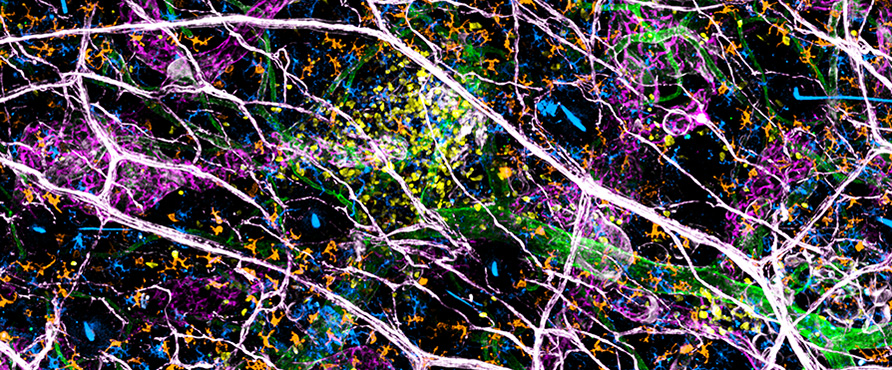
Using advanced microscopy techniques and spatial statistics, we aim to decipher the cellular and molecular mechanisms that determine intranodal fibroblast regionalization and dendritic cell localization.
3. To understand the spatial regulation of lymphocyte priming and differentiation
Using TCR transgenic mice and genetic perturbations, we aim to decipher how T cell distribution and differential coupling to antigen-presenting dendritic cells controls T cell priming and helper differentiation and ultimately delivery of effector function.
Together, our work aims at understanding how host defence mechanisms are orchestrated in a pre-emptive manner (cell numbers and spatial distribution) to maximize the probability of successfully resisting pathogenic insults. Ultimately, the knowledge generated through our research is expected to contribute to the broad understanding of how the immune system works and to refine immunotherapeutic interventions.