Institute of Molecular Genetics of the Czech Academy of Sciences
Evolutionary developmental biology (Evo–Devo) offers two complementary ways to approach fundamental biological questions. By comparing development across species, it reveals conserved principles that guide how cells, tissues, and organs form. At the same time, it explains how evolutionary changes in developmental programs have generated the remarkable diversity of life. Building on Darwin’s idea that all species share common ancestry, we investigate:
To address these questions, we combine state-of-the-art approaches—including transgenesis, mutagenesis, single-cell RNA sequencing (scRNA-seq), and pharmacological perturbations—across a range of animal models.
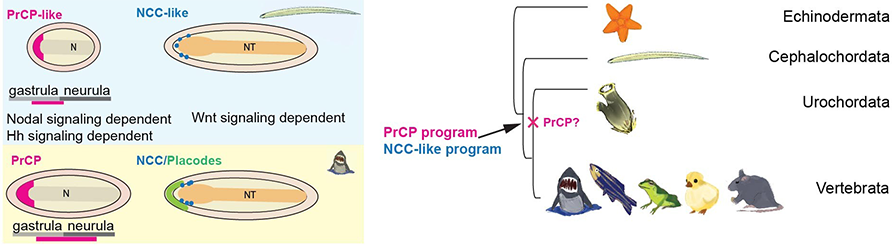
A central focus of our work is the origin of vertebrates from chordate ancestors. For this, we use amphioxus (Branchiostoma), an early-branching chordate that retains many ancestral features and is often compared to Cambrian chordate fossils such as Pikaia. For example, one of our key research interests is understanding how the vertebrate head evolved from an ancestral chordate body plan (Markos et al., 2024).
We explore how gene regulatory mechanisms shape eye development and how these mechanisms have been modified through evolution. Our work integrates molecular biology, genetics, cell biology, developmental biology, biochemistry, and bioinformatics to dissect the complex gene regulatory networks that control embryonic development across diverse organisms.
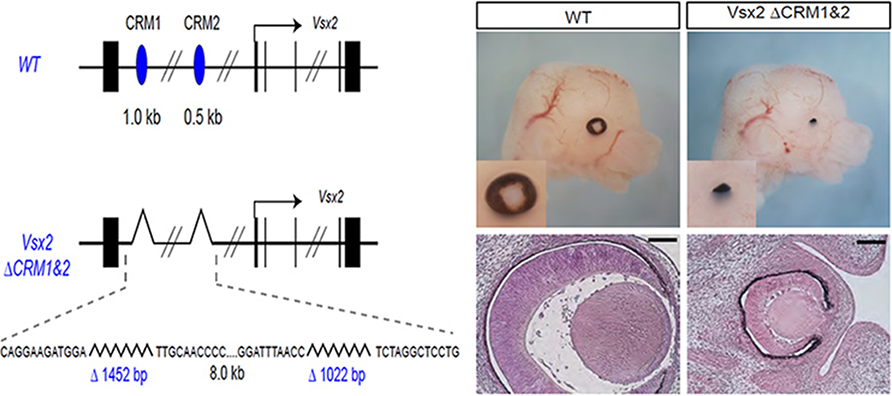
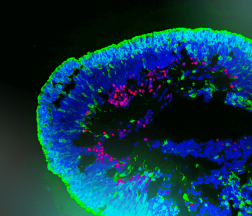
A major focus of the lab is vertebrate eye development, examining how key transcription factors such as Pax6 and Meis orchestrate the formation of retina, lens, and cornea, as well as how these components evolved across species (Dupacova et al., 2021; Mikula-Mrstakova and Kozmik, 2024). We use diverse vertebrate models —including mice, chicken, and fish—to gain insights into both conserved and divergent aspects of eye biology. This comparative approach not only deepens our understanding of fundamental developmental processes but also sheds light on congenital eye disorders in humans.