
Institute of Molecular Genetics of the Czech Academy of Sciences

Dear Colleagues,
As usual at this time of year, I would like to briefly summarize the main events of the past year at our Institute and outline the priorities for 2026. For clarity and simplicity, the text uses the generic masculine form, which refers to all persons regardless of gender.
In 2025, as in previous years, the main task of the Institute management was to ensure high-quality facilities and appropriate research conditions within the confines of a public research organization. Equally important was securing funding for our activities and creating conditions to ensure that the funds the Institute has obtained and continues to obtain are used in accordance with applicable rules to effectively and transparently transform them into significant new knowledge in our areas of research. These tasks were addressed by the Management Board, the Institute Council, and the Supervisory Board, whose composition remained unchanged throughout the year.
Last year, two new junior groups were established: the Laboratory of Cilia Genetics and Pathology, operating at the Krč site, and the Laboratory of Immunophysiology, located at the BIOCEV Centre in Vestec. In terms of research capacity, the Institute is entering 2026 with 25 research and 2 service-research groups (22 in Krč and 5 at the BIOCEV Centre), with three large national infrastructures hosted at the Institute of Molecular Genetics, two of which are located in Krč (Czech-BioImaging, CZ-OPENSCREEN) and one in Vestec (Czech Centre for Phenogenomics), and with one of the nodes of the pan-European bioinformatics infrastructure ELIXIR CZ. Core facilities, including the Proteomics Laboratory, a joint workplace of the Institute of Physiology and the Institute of Molecular Genetics, which entered its seventh year of operation, have been and continue to be of great importance for ensuring the work of research groups.
As of December 31, 2025, our Institute had a total of 554 employees (473 when converted to full-time equivalents), of whom 261 worked in research groups, 28 in service-research groups, 29 in core facilities, 180 in large research infrastructures, and 56 in technical services and administrative departments, including the Office of the Director.
The results of our research were disclosed in more than 130 publications in leading international journals in 2025. If I were to highlight the four most significant results of the Institute from my point of view, I would mention the publication by Veronika Niederlová et al. from the Laboratory of Adaptive Immunity led by Ondřej Štěpánek, published in the journal Nature Communications; the work of Petr Jansa et al. from the Laboratory of Epigenetic Regulations led by Petr Svoboda, published in the journal Proceedings of the National Academy of Sciences; Veronika Zimolová et al. from the Laboratory of Cell and Developmental Biology led by Vladimír Kořínek, published in the journal Leukemia; and the publication by Anoop Kumar Yadav et al. from the Laboratory of Cancer Biology led by Lukáš Čermák, published in the journal Nature Communications.
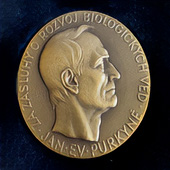

Significant attention was paid last year to supporting and developing the PhD programme, the PhD conference, and the 49th annual course Advances in Molecular Biology and Genetics. In addition, a number of other conferences, seminars, and courses were held, with the participation of members of the Institute research and service groups. The work of many of them has been recognized on various occasions. Examples include awarding of the Jan Evangelista Purkyně Medal to Radislav Sedláček and the Gregor Johann Mendel Medal to Pavel Dráber. From a historical perspective, we may consider as outstanding the conference held on the occasion of the 100th anniversary of the birth of the founder of our Institute, Milan Hašek.
The activities of research groups have resulted in new applications and contracts, which in many cases reflect cooperation with the business sphere and bring considerable financial resources to the Institute budget (more than CZK 40 million in the past year). The Centre of Technology Transfer continued its activities in supporting these initiatives. Increased activity in this area can be expected in connection with the Institute’s involvement in the biotechnology interest group Prague.bio, z. s., of which IMG is one of the founding members.
In 2025, as in the previous year, we obtained most of the funds to cover the costs of research activities in the form of specific funding from grant agencies and other providers. These funds amounted to CZK 1,051 million, of which CZK 362 million was provided by our Founder. In 2025, the Institute worked on a total of 107 grant projects from various providers, in particular the Czech Science Foundation (39 projects), the Ministry of Education, Youth and Sports (15 projects), the EU (13 projects), the Ministry of Health (15 projects), and the Technology Agency of the Czech Republic (5 projects). On average, each research group is involved in almost four research projects, which creates a considerable administrative burden. Support in the preparation of grant projects, monitoring their progress, and providing information on grant opportunities is provided by the grant group, which was established in 2022 within the Economy Department.
The administrative and technical departments, which include the Administrative Team, Economy Department, Building Maintenance, and Information Technology, play a crucial role in ensuring the research work of the entire Institute. In 2025, as in previous years, these departments handled a wide range of demanding tasks at a high level, including managing the Institute operations, economic administration, grant project administration, building renovations and repairs, external audits, computer network maintenance, and many others. Essential important service units for most research groups are the animal breeding facilities, which are located in Krč, at the BIOCEV Centre and in Koleč. Many other activities of the Institute are documented on our website and in the minutes of the IMG Council, which are available on the Institute intranet.
Last year, we continued the tradition established during the COVID-19 pandemic, when we split the all-Institute meeting into two dates. On January 8, a meeting was held to mark the start of 2025, focusing primarily on administrative and service units, and on May 22 and 23, a two-day annual IMG conference was held, at which research group leaders presented and discussed their research projects. This conference was followed by an all-Institute meeting focused on science and associated with awarding the best research papers for the previous year. The conference was followed by an all-Institute party. Also important was the meeting of the heads of research and administrative units on October 22, 2025. The Institute held a number of events, including opening selected laboratories to the public as part of the Open Doors Day, laboratory tours for our employees’ children, Researchers’ Night, a Science Fair, and Lectures for Non-Scientists.
The year 2026 will build on the work of previous years and will be marked by further improvements in the activities of our Institute in several areas. A new laboratory for working with infectious viruses and bacteria at the BSL3 safety level will be put into operation in the Krč part of the Institute. Furthermore, the data repositories will be upgraded and expanded, and the digitization of research data will continue with the use of electronic laboratory notebooks and other data management tools. The construction of a 60 m3 rainwater retention tank remains in the plan. Attention will also be paid to other areas, in particular improving technology transfer, improving institutional services, strengthening cybersecurity in accordance with the NIS2 directive, and developing the computer network. The aim of these and a number of other activities is to improve the conditions for the activities of our research laboratories and the work of employees in general. The HR Excellence in Research award should also contribute to the achievement of this goal.
In conclusion, I would like to thank all employees of our Institute in the research, administrative, and service units for their work done so far and express my conviction that in the coming period we will continue to work together to improve the quality of our Institute, achieve top scientific results, and promote science.
28 January 2026
Petr Dráber