Institute of Molecular Genetics of the Czech Academy of Sciences
Leukocyte signal transduction, inflammation, immune response, inflammatory diseases, membrane adaptor proteins
The Laboratory of Leukocyte Signalling investigates how leukocyte proteins regulate receptor signal transduction and how their dysfunction triggers inflammatory disease. Most of our research centers on membrane adaptor proteins and Src-family kinases (SFKs), specifically their roles in inflammation, haematopoiesis, and inflammatory disease pathology. However, we are also interested in the pathophysiology of inflammatory diseases in general.
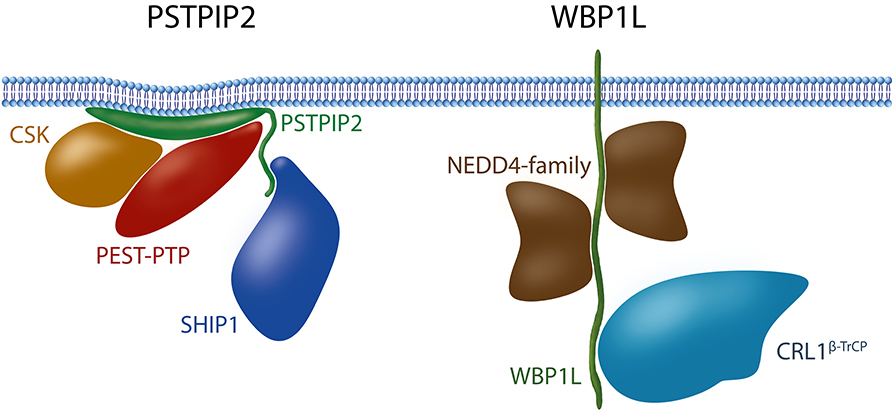
Membrane adaptors organize signalling networks near cellular membranes to propagate or regulate immune responses. Large part of our recent research has been focused on membrane adaptor PSTPIP2. Its deficiency in mice triggers chronic multifocal osteomyelitis (CMO), an autoinflammatory disease marked by spontaneous inflammatory bone lesions. It serves as a model for similar human disease chronic recurrent multifocal osteomyelitis (CRMO). Our work analyzes the precise molecular mechanisms by which protein complexes organized by PSTPIP2 in neutrophil granulocytes control inflammatory pathways, how its absence leads to unconstrained inflammation, to what extent mouse-model discoveries translate to human CRMO and if they can lead to novel therapeutic approaches.
Another membrane adaptor protein we are extensively studying is WBP1L, aberrantly expressed in certain types of childhood leukaemia. Our findings indicate WBP1L regulates haematopoiesis by modulating key chemokine receptor CXCR4 and by regulating function and development of haematopoietic stem and progenitor cells. As a result, WBP1L influences efficiency of bone marrow transplantation and we are currently researching strategies to exploit this feature therapeutically in human patients.
Src-family kinases are involved in the regulation and propagation of signalling through a number of leukocyte receptors and membrane adaptors. Our research on these kinases focuses on mutations in their genes that precipitate inflammatory diseases and on the mechanisms of how these mutations lead to immune system dysfunction.
To support our molecular investigations, part of our team also develops detergent-free membrane disintegration methods to analyze distribution of these molecules in plasma membrane.
Finally, we investigate human regulatory T cell (Treg) biology. Specifically, we aim to decode what they recognize and how it affects their fate, including tissue homing and adaptation. We further aim to translate this knowledge into the next generation of tissue-specific engineered Treg therapies to treat autoimmunity.